
 United Kingdom
-
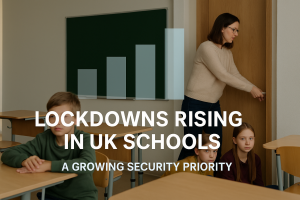
Documented lockdown incidents (media-verified): At least 117 school lockdowns were reported Jan–Sep 2025, affecting ~100,000 pupils (Schools Week investigation). Triggers: ~38% nearby incidents (weapons/protests/intruders), ~21% malicious communications, ~18% suspected intruders on site. Schools Week
-
Policy/guidance: DfE guidance (updated Jul 2024) tells schools to maintain invacuation/evacuation/dynamic lockdown plans and drill them; unions (NASUWT) publish model procedures. GOV.UK+1
-
Protective security (2025): Home Office/DfE guidance for education settings emphasises appointing a security lead, simple plans, and SCaN awareness. GOV.UK
⚠️ There’s no national UK database of lockdown incidents; counts come from investigative journalism and local reporting.
United States (proxy data—lockdowns are widely used but not centrally counted)
-
Prevalence of drills: ~95% of U.S. public schools conduct lockdown/active-shooter drills (longstanding). Everytown+1
-
Active incidents (context for lockdowns):
-
School shootings with injuries/deaths: 2019–2024 yearly counts = 24, 10, 35, 51, 38, 39 (EdWeek). Education Week
-
Broader “gun incidents” on school grounds: 2021–2023 reached the highest 3-year total in 40 years (Pew/Reuters). Reuters
-
Gunfire on school grounds (Everytown): 118 incidents in 2025 (to Aug 11). Everytown Research & Policy
-
-
Scale of lockdowns (historic but illustrative): 4.1 million U.S. students experienced at least one lockdown in 2017–18 (WaPo analysis). The Washington Post
Continental Europe
-
General picture: Far fewer publicly recorded “active-threat” school incidents than the U.S.; no cross-EU dataset for lockdowns. National guidance exists, but counts are typically unavailable.
-
COVID closures (not security lockdowns) are well documented by OECD/UNESCO, but that’s a different phenomenon. OUP Academic
Notes:
• UK figure = conservative; relies on media capture. Schools Week
• US figures are incident proxies that typically drive lockdowns; nationwide lockdown totals aren’t tracked. Education Week+1
What this means (practically)
-
UK: Lockdowns are rare per-school but rising in visibility, with policy momentum (DfE guidance; sector calls for standardisation). Expect more formalised plans/drills and better comms with parents. GOV.UK+1
-
US: High baseline of gun-related incidents means lockdowns/drills are systemic and routine. Education Week+1
-
Europe: Lower incident prevalence and data scarcity; preparedness varies by country and is usually embedded in broader civil-protection guidance.
Recent Comments