
When we talk about lockdown procedures, the conversation often centres around schools, protecting pupils and staff from potential harm during an external threat or serious internal incident.
But the same principle applies far beyond the classroom.
Healthcare environments, particularly Primary Care Networks (PCNs), GP surgeries, walk-in centres, and community clinics 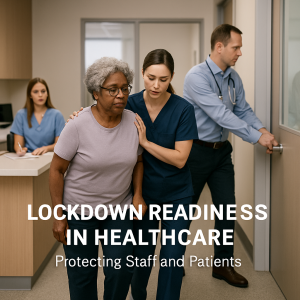 are increasingly exposed to unpredictable situations that can escalate rapidly. A well-planned, well-practised lockdown procedure can mean the difference between order and chaos when those moments arise.
🔒 Understanding the Purpose of a Lockdown
A lockdown is not about fear or overreaction. It’s a controlled safety response designed to quickly secure a site and protect those within it.
In healthcare, it could be triggered by:
-
A violent or aggressive patient or visitor
-
A suspected weapon on site
-
A nearby police or terror incident
-
Uncontrolled behaviour linked to substance misuse or mental health crisis
-
Unauthorised entry into clinical or restricted areas
In each case, the aim is simple — to minimise risk, protect life, and maintain communication until emergency services take control.
🏥 Why Healthcare PCNs Need Lockdown Planning
Unlike schools or large corporate buildings, many healthcare premises are open, public-facing, and designed for accessibility.
That openness, while essential for care, can make them vulnerable when tensions rise.
Lockdown training helps staff:
-
Recognise early warning signs of aggression or threat
-
Understand when and how to initiate a lockdown
-
Know where to move patients and colleagues safely
-
Communicate clearly under stress
-
Liaise effectively with police or emergency responders
When every second counts, clarity of action is critical.
🧠 Training Builds Confidence and Reduces Panic
Without preparation, people freeze or make dangerous assumptions.
With training, they act calmly and instinctively.
That’s why scenario-based training is essential — walking staff through realistic drills, identifying choke points, reviewing access controls, and refining communication systems.
The outcome is not just a procedure — it’s resilience.
Teams who know exactly what to do, how to do it, and when.
📈 Legislative and Moral Drivers
The upcoming Terrorism (Protection of Premises) Bill, known as Martyn’s Law, will place greater emphasis on having proportionate security measures in all public-access premises — including healthcare settings.
PCNs that plan ahead now will be better prepared for compliance and, more importantly, better positioned to keep people safe.
🧩 How Urban Risk and GPS-Now Can Help
At Urban Risk Management and GPS-Now, we deliver practical, scenario-driven lockdown and conflict-management training across education, healthcare, and community sectors.
Our programmes focus on:
-
Communication under pressure
-
Safe room identification and egress routes
-
Dynamic risk assessment
-
Staff role assignment
-
Post-incident debrief and emotional support
Because effective lockdown planning isn’t just about closing doors — it’s about opening the right conversations.
Preparedness saves lives.
If you manage a healthcare setting or PCN and would like guidance on developing or testing your lockdown plan, we can help.
📩 Contact us at www.gps-now.co.uk or www.urbanriskmanagement.co.uk
#HealthcareSecurity
#LockdownTraining
#PrimaryCareNetworks
#Safeguarding
#EmergencyPreparedness
#MartynsLaw
Recent Comments